Director Leslie Iwerks and Sound Designer Bonnie Wild Talk Disneyland Handcrafted
The Disney+ documentary uses archival visuals and immersive sounds to place viewers in the midst of the historic theme park during its construction.
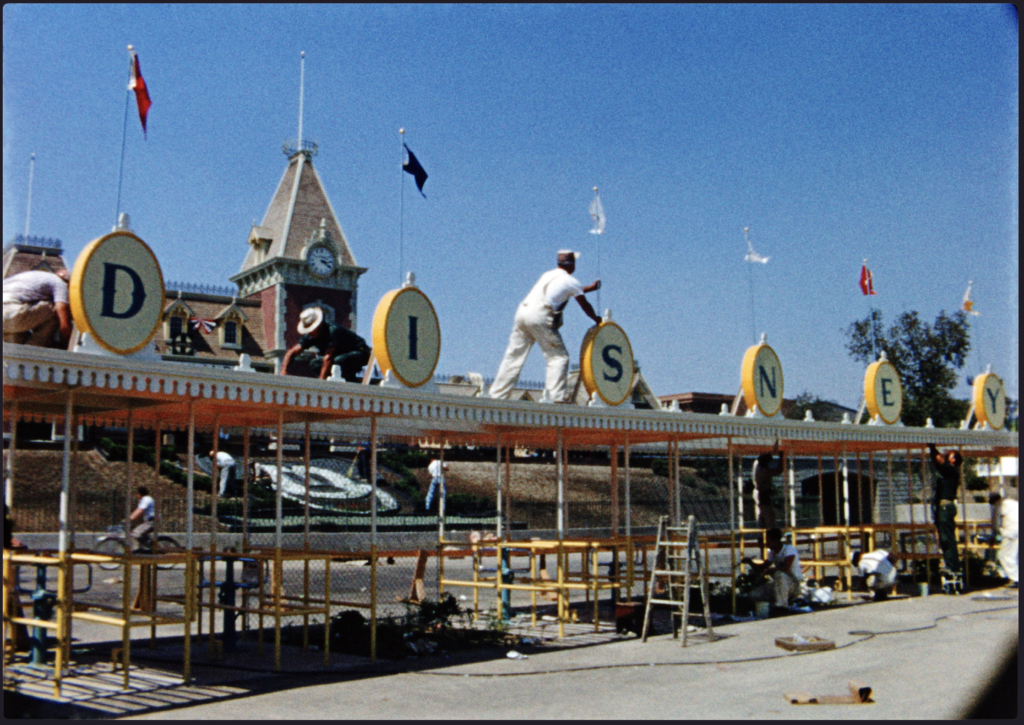
Just a year before it opened in July of 1955, Disneyland Park was a blank canvas. Dozens of acres of barren, sandy soil had been mostly cleared of its orange and walnut trees. Standing in the middle of the property, Walt Disney could imagine Sleeping Beauty Castle towering in front of him, the Mark Twain riverboat steaming along his left, and behind him the quaint shops of Main Street, U.S.A. Disney’s team of artisans and craftspeople had less than 12 months to build all of it from the ground up.
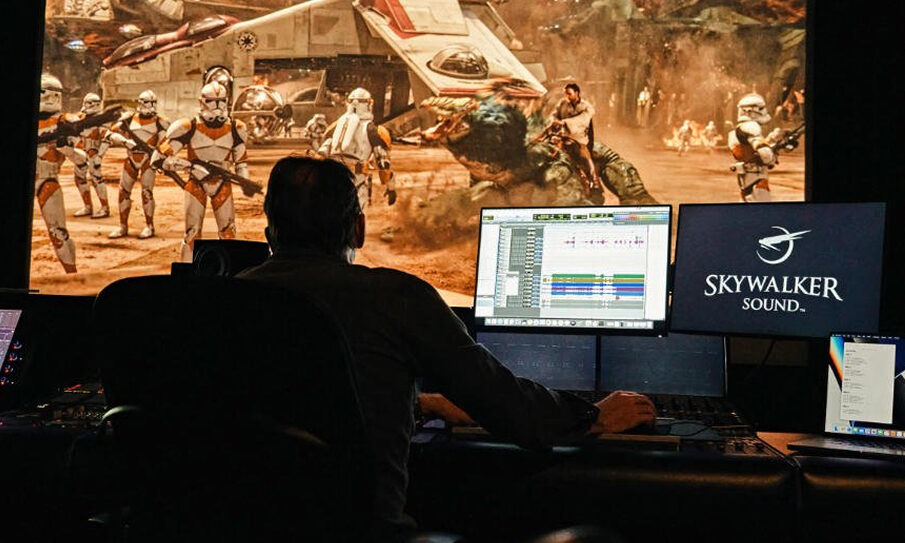
Starting work on the 2026 Disney+ documentary, Disneyland Handcrafted, Skywalker Sound’s Bonnie Wild had something of a blank canvas herself. Director Leslie Iwerks and team had assembled a narrative using archival footage captured throughout the park’s construction, much of it in beautifully lush 16mm Kodachrome. Practically all of it, however, was silent. While Iwerks and editor Mo Stoebe compiled a rich selection of audio recordings with those who’d built Disneyland, the director envisioned a much deeper sense of immersion for the soundscape. “From day one, I said that we had to go with Skywalker Sound because they could bring it to life like nobody else,” Iwerks recalls.
“When we first spoke to Leslie, the brief was that it would be similar to working on an animated movie,” says Bonnie Wild, Handcrafted’s supervising sound designer and re-recording mixer. “We had to build up the world from scratch. We need to make it believable, almost like the soundtrack was part of the original footage. Our work needed to be an invisible process.”
“Puzzle pieces from everywhere”
Wild was responsible for breathing life into everything from bulldozers and helicopters to chisels and hammers, what she describes as “puzzle pieces from everywhere.” Specific vehicles were researched and their distinct engines sourced, for example. The Skywalker Sound library of recordings proved essential, which, along with recordings of every imaginable type of machinery or natural element, also includes many recordings of Disneyland itself.
Additional sound material from the Disney Archives helped provide an additional layer of authenticity. “It was mostly the announcements and music that were heard in the rides,” Wild says. “It was fascinating to listen to all of it. You’re listening to history in that kind of way.”
Skysound Foley artist Shelley Roden and Foley mixer Dennis Leonard lent their skills for sounds that “were really specific,” as Wild notes, like precise footsteps or hammer beats, details that would have proved exceedingly laborious to hand-edit.
“I was really excited to work with Bonnie,” says Leslie Iwerks. “She is lovely, kind, wicked smart, and very intuitive.” Recalling her visit to Skywalker Ranch to hear Wild’s first pass at the soundscape, the director notes how the archival footage “just came alive” as a result. “I would never have believed that it was once silent footage. It became this immersive experience. I forgot that I was hearing a created soundscape. That’s how believable Skywalker and Bonnie can make it.”
 (Credit: Disney).
Filmmaking as a Point of View
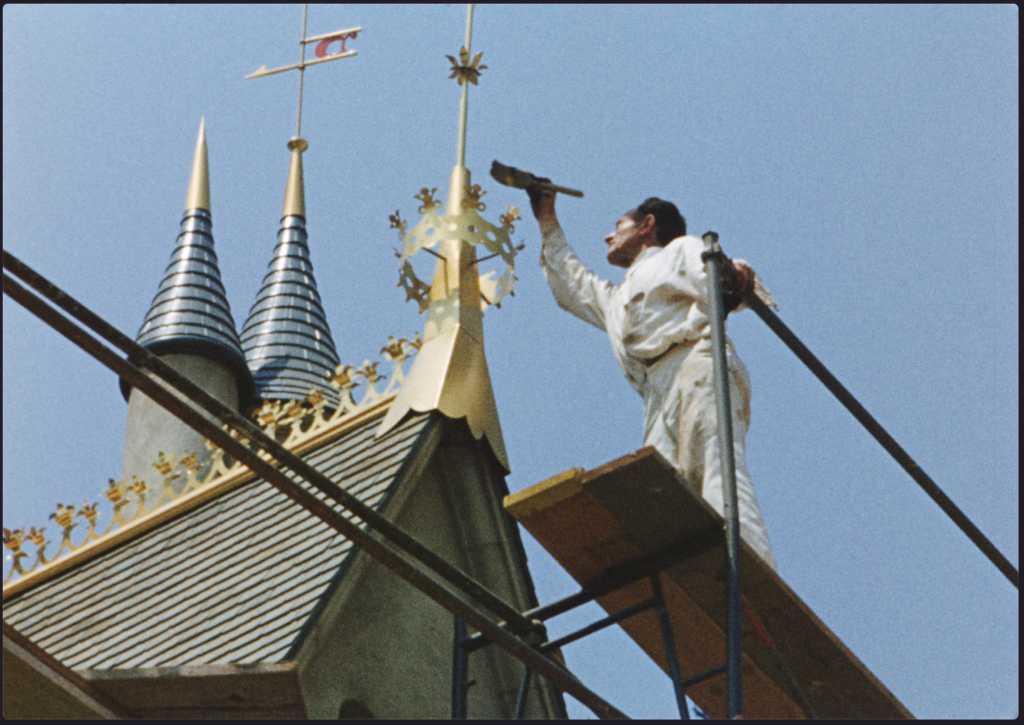
The remarkable visuals that capture the breakneck construction of Disneyland were captured by filmmakers normally employed on Walt Disney’s True-Life Adventure series of nature documentaries. “They were nature photographers who were used to being out in some location, like the desert, filming animals,” as Iwerks explains. “They were used to being patient and watching things unfold in front of them, as well as creating little gags and things like that. To think of the park unfolding before their eyes, and through their lenses, was really exciting.”
That point of view made its way into the structure and feeling of Disneyland Handcrafted. Iwerks and Stoebe chose to include strips of film leader between the actual footage of the construction, lending the story “a tactile nature,” as the director puts it. “The organic nature of raw 16mm film became a sort of visual language. To me, there was a magic to the actual format of this archival material.”
That sense of artifice required Bonnie Wild to likewise include corresponding texture in the soundscape. “I designed the tape scroll with the click, as well as the film tick of the timelapse shots,” she explains. “Those are indications for the audience that help convey how these were recorded. They’re used as motifs throughout. For the black and white footage, I’d sneak in a tiny layer of noise flaw, just to help give the idea that it’s a different piece of archival. The color feels more immersive.”
The subjective layer of the original filmmakers’ point of view influenced Handcrafted’s ultimate narrative as well. “I wanted the audience to understand that all of this footage was handcrafted in and of itself, as was the park,” says Iwerks.
At the beginning of the production, the director and team organized roughly 60 reels of source footage, each in a different state of assembly from various use cases over the decades. As they pieced back together the original takes in their respective groups, the Handcrafted team could newly understand the intent of the documentarians in their coverage of different events. “The shots had never been edited in their intended way before,” says Iwerks, “with that real True-Life Adventure vibe, all vérité, with only sound effects, just living in it.”
 (Credit: Disney).
Disneyland in Dolby Atmos
Handcrafted’s soundscape immerses its audience in both a subtle and all-encompassing way, which is a credit to Bonnie Wild’s skill mixing in Dolby Atmos. “I hadn’t mixed in Atmos before, and that was really fun for me,” says Iwerks. “I wanted viewers to feel like they were standing in the middle of Disneyland. That soundscape needed to go around you, above you, and behind you, just like it would in a movie theater.”
For Wild, the fact that she was required to create virtually every sound from scratch meant that, in fact, she needed to make very careful decisions about the focus of the mix in each given moment.
“A lot of consideration was given to understanding at what point does having a surround quality actually take you out of the feeling that you’re living in the footage,” Wild explains. “In other situations, when you want to make footage feel archival, the first thing you do is make it narrow and mono. That immediately tells you that something was recorded a long time ago. But for this, we didn’t want that feeling because the story is about being in the park with everything taking place around you. So I had to rely more on the timbre of the sounds and how I was equalizing things.
“There’s a particular slap that everything has when you listen to archival material,” Wild continues. “I gave everything this kind of filter to make it feel like a really good recording from the time, but also one that was in surround. It worked differently at various moments. When you see the black and white television footage, we go full archival and push the sound all up front, for example. Then when we go back into the park, the sound opens out and we’re there again.”
The success of the mix is evident in Handcrafted’s emotional dynamic, which holds a certain tension between the wonder and magic of Disneyland as we know it today and the harrowing intensity involved in making sure it was ready to open on schedule. Wild layered composer Cyrus Reynolds’ score into the mix as a critical means of driving the story. “I let the music and the sounds of the park do the work,” Wild notes. “The park itself is creating that emotional drive.”
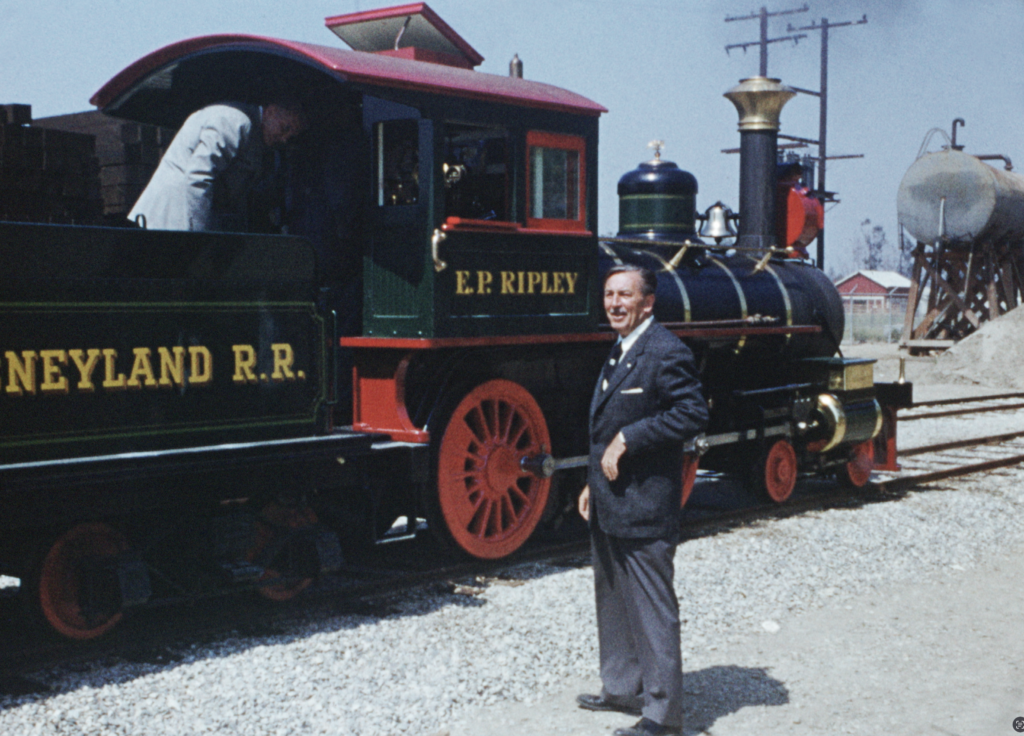
“When we had something like the sequence with the crew laying the train track, I wanted the music to help lead into that,” explains Iwerks, “so I asked Cyrus to make the beat of the instruments feel like it’s matching the footage, and then it stops right when the final hit comes. Then you go into the full vérité. I wanted an organic, seamless transition from the music into the vérité, and the sound effects are the bridge.”
 (Credit: Disney).
“A filmmaker’s dream”
Disneyland Handcrafted is Leslie Iwerks’ second collaboration with Skywalker Sound, her first being a kindred project, the Disney+ docu-series, The Imagineering Story (2019). “The layers of creativity with anyone working at Skywalker is a real draw for me,” she says. “Everyone in the industry wants to work with Skywalker.”
Iwerks describes coming to Skywalker Ranch to collaborate with the sound artists as “a filmmaker’s dream. You feel like you’re immersed in filmmaking,” she adds. “Every filmmaker who goes there appreciates it so much.” And those filmmakers, as Iwerks is keen to note, could be working on any type of project, no matter the size, genre, or medium.
“I didn’t know for a long time that Skywalker would work on a documentary,” Iwerks says. “I always assumed you needed to have a large budget to walk in the door there. Had I known otherwise, I would’ve brought my very first film there, Recycled Life (2006). I’m so excited about sound and when I was able to take Imagineering Story to Skywalker, it was so great and brought the whole project together.
“For any documentary filmmaker looking to do a film that has a distinct soundscape, consider going to Skywalker,” Iwerks adds. “It doesn’t hurt to ask. You don’t know until you try. That’s exactly what I did and what I will continue to do. It’s not solely about the budget at Skywalker. It’s a place filled with people who care about film, who care about bringing the experience of a story to life in the most impactful way, the most entertaining way, and the most emotional way. To me, that’s why you go to Skywalker, because they want to help bring a great story to life through sound.”
In the case of Disneyland Handcrafted, Bonnie Wild finds inspiration not just in the film’s story but in the place that is its main character. Having grown up in England and not making her first Disneyland visit until adulthood, this project was an opportunity to deepen her appreciation for the happiest place on earth.
“Millions of people have a special connection to Disneyland and this film is telling the story of how Walt Disney gave that to them,” Wild reflects. “He intended to create something special for people to enjoy forever. He didn’t cut corners. It was all built by hand. The craftsmanship is incredible. Walt talks about how, if you give people this beautiful thing, they will appreciate it and love it, even if they don’t realize that it’s because of the craftsmanship. It’s incredible thinking about how you can give people an experience by creating something unique, thoughtful, and intentional. That’s how Leslie approached the documentary as well, crafting it with real intention, piece by piece. The film gives people another kind of experience.”