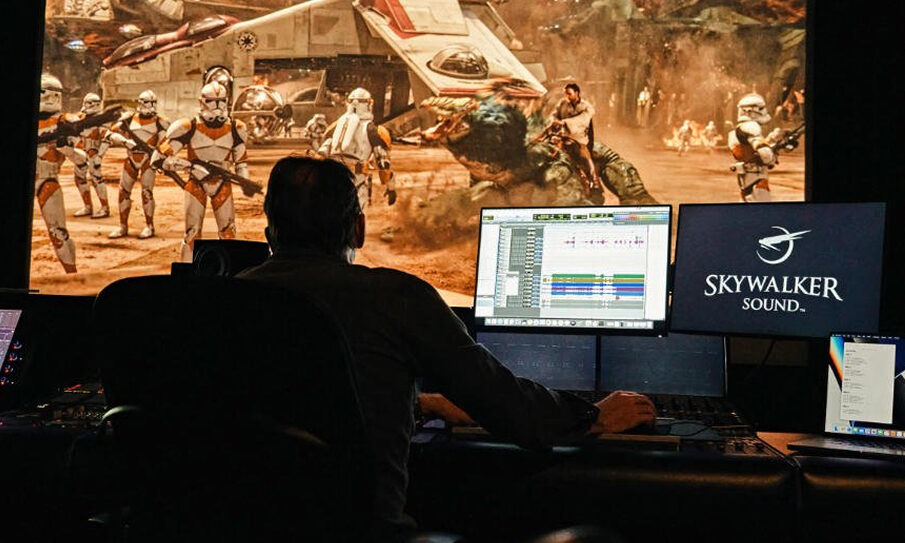
From Silence to Shock Waves: Building a Soundscape for Paul Thomas Anderson’s One Battle After Another
Skywalker Sound helps drive the director’s signature filmmaking style into new sonic territory.
“‘More French Connection. Less Fast and Furious.’”
Skywalker Sound re-recording mixer Tony Villaflor remembers director Paul Thomas Anderson’s request for an intense car chase that takes place early on in One Battle After Another (2025).
The director described how the chase, which follows a violent bank robbery and the murder of a security guard, should be free of music and instead rely on sound. “As the sound effects mixer, I was like, ‘Oh, that’s great! I can play lead guitar here,’” Villaflor laughs. “It was awesome.”
After killing the security guard, Perfidia Beverly Hills (Teyana Taylor) flees the bank with fellow accomplices from the French 75 revolutionary group. They hold on for dear life inside a minivan careening through downtown city streets, with the sounds of car alarms, screeching tires, and revving engines building tension and a sense of danger. The minivan crashes, and Perfidia runs, but approaching sirens signal the police are catching up. A helicopter – watching from above but never seen on camera – gets louder as the dragnet closes.
The chaotic two-minute sequence gives the Dolby Atmos system a workout. “There’s Atmos surround in all the overheads, and lots of subwoofer,” Villaflor tells Skysound.com. The cinematic cacophony increases in volume until an abrupt cut to a nearly silent shot of Perfidia on the ground. As she’s taken into custody, the scene is backed by a much smaller, essentially mono mix.
The car chase is one of several sequences in which Anderson intentionally plays up stark contrasts in sound – quickly cutting from quiet to very loud (or the reverse) to create an emotional, almost sonic, jump scare.
“It’s jarring,” says supervising sound designer and re-recording mixer Chris Scarabosio. “You don’t always expect these things.”
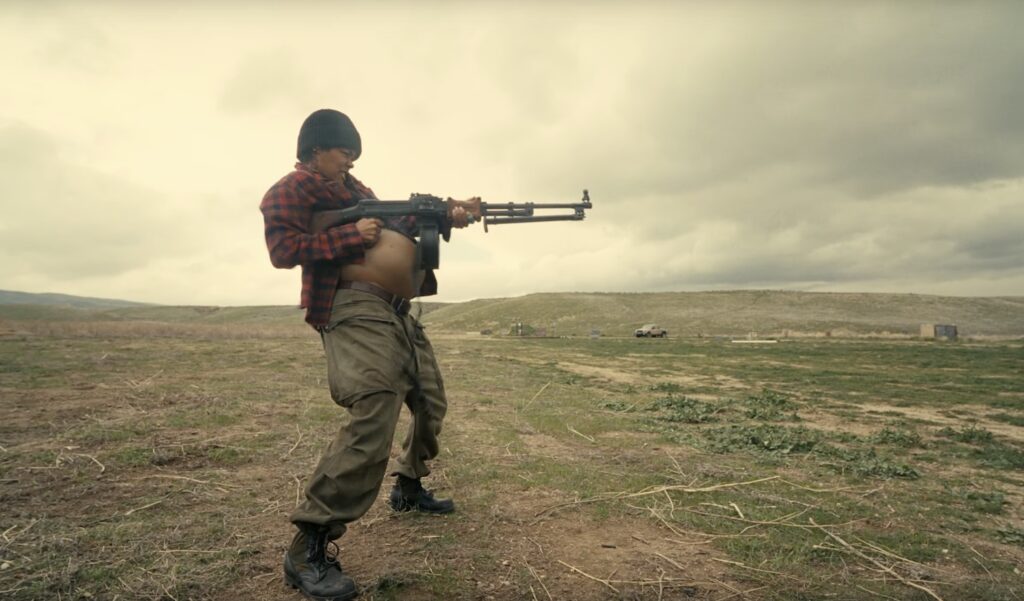 (Credit: Warner Bros.)
The unexpected also happens as Perfidia walks down a dark street, a scene backed by the Shirelles’ tune Soldier Boy. Suddenly, the picture and the song cut mid-beat, switching to a daytime shot as she unleashes a startlingly loud fusillade of bullets from an AK-47.
This sound design technique is one of the signature characteristics of Anderson’s latest film, which tells the story of ex-left-wing revolutionary Pat Calhoun (Leonardo DiCaprio) and his 16-year-old daughter, Charlene (Chase Infiniti), secretly living under the aliases of Bob and Willa Ferguson in the town of Baktan Cross, California. The duo is discovered and then targeted by Colonel Steven Lockjaw (Sean Penn), a corrupt military officer from their distant past.
“The whole movie is about tension and release of tension, but mostly about tension,” Scarabosio says. “And that just keeps building.”
The film was pre-mixed in the Technical Building at Skywalker Ranch ahead of the final mix on Stage 10 at Warner Bros. Studios. Anderson frequently sat alongside Scarabosio and Villaflor and sometimes worked the audio faders himself. “He parks himself right at the console,” Scarabosio says. “He’s hands-on,” Villaflor adds. “And he knows when it’s right, or when it’s wrong, and when he wants it to be different.”
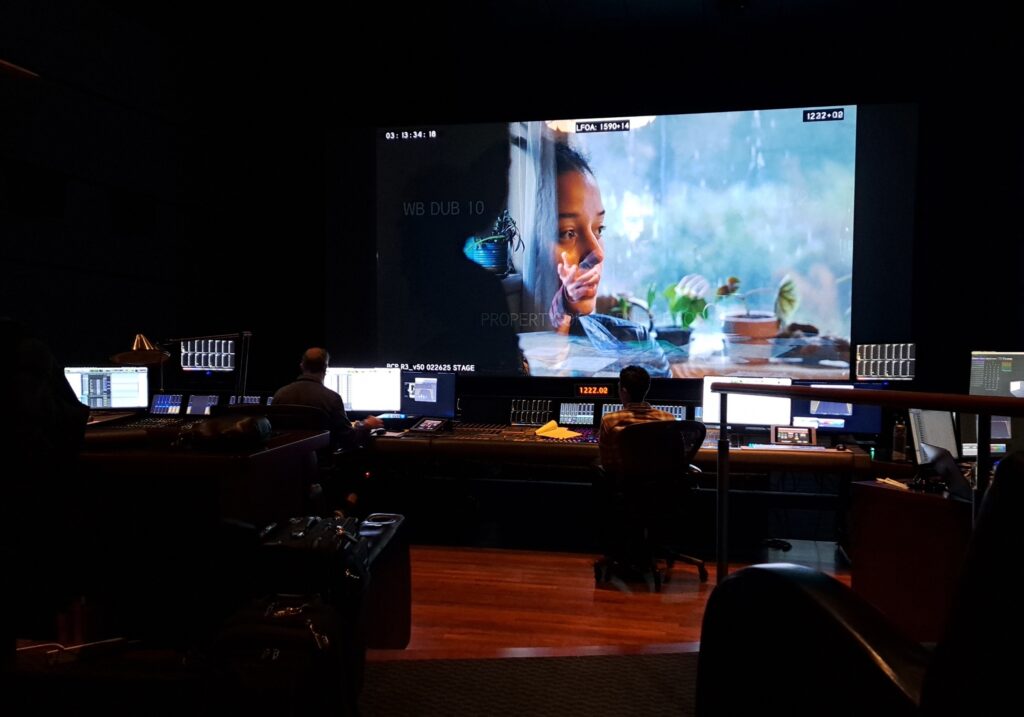
Scarabosio, who collaborated with Anderson on films including Punch Drunk Love (2002), There Will Be Blood (2007), and Licorice Pizza (2021), is intimately familiar with the director’s sonic style. But after reading the script for One Battle After Another, he realized the story presented an opportunity to do something different.
“Having worked with Paul, he has an aesthetic, and he doesn’t always want things to sound super ‘surround-y,’ with a lot of Foley, with that polished, Hollywood sound,” Scarabosio says. “But I was like, ‘How big can we go with this?’”
Scarabosio offered to create a mix of the first 15 minutes of the film to see if Anderson liked his creative approach. “We did that,” recalls Scarabosio, “and he was like, ‘This is exactly how we should do it.’”
Anderson also agreed that the film would be his first to be mixed in Dolby Atmos sound. “It’s super dynamic,” Villaflor says. “When the film wants to be loud and visceral and exciting, it’s definitely that. It helps to put people on the edge of their seat, or make you jump out of your seat. It’s big and bold for sure. But it’s also very intimate.”
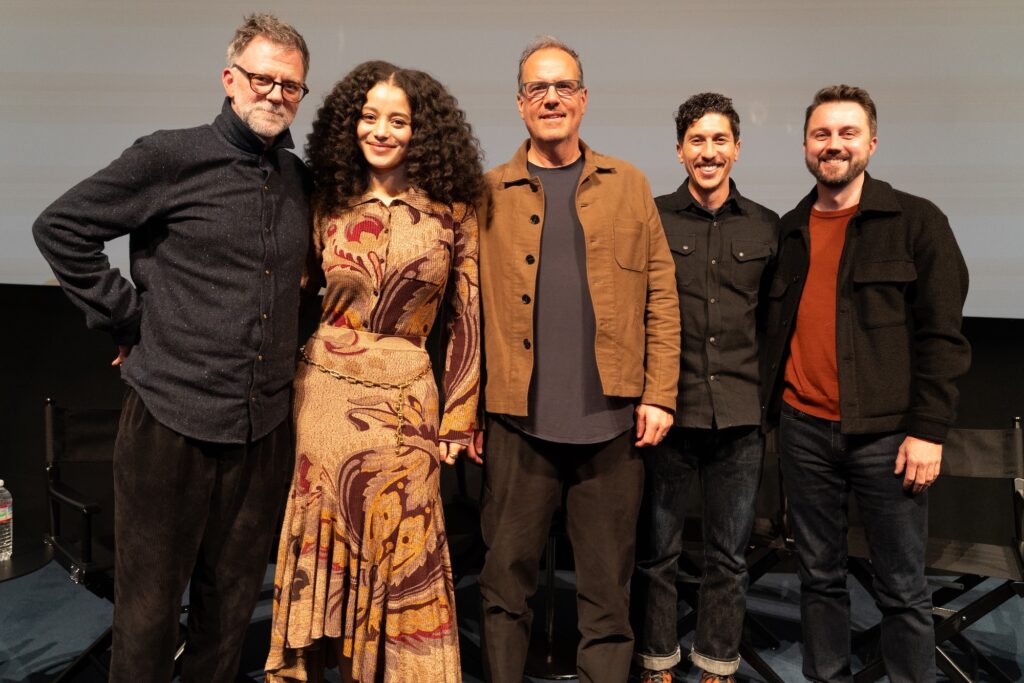
Finding the right sounds for the cars seen in the climactic desert highway chase sequence was a top priority, including a white Dodge Charger with Willa, a blue Ford Mustang driven by Tim Smith (John Hoogenakker), and a purple Nissan Sentra that Bob hotwires and steals. The production recordist, Jose Antonio Garcia, did his best to record as much of the car activity during the shoot. Sound editor Jeremy Molod compiled all the clips in one place.
“The first thing we did was get all the wild tracks, and Jeremy went through and made a whole library of everything that got recorded on set,” explains Scarabosio. “We had it all put in a library with metadata. Jose got great recordings of the Nissan, but we needed to create the Mustang and Charger engine sounds. Between [sound effects editor] Justin Doyle and myself, we edited three or four versions of both cars.”
The distinctive, strained sound of the Sentra as Bob guns the engine, trying to catch up to Willa and Tim, was also taken directly from the picture car. “A lot of what Bob is doing is maxing that thing out. And it has such a goofy sound to it, which is so perfect for his character,” Scarabosio says. “I’m sure we would have come up with something great, but I heard that sound and said, ‘This is perfect!’”
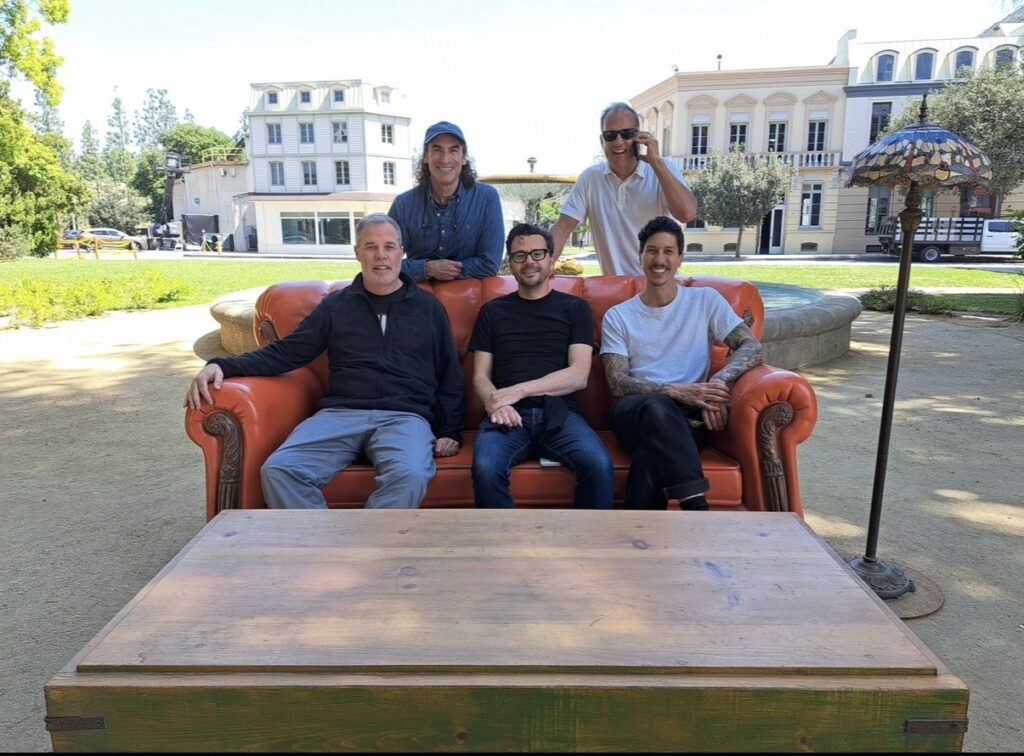
The mix, says Villaflor, was designed to slowly ramp up the sense of danger as Willa speeds up and down the undulating highway with Tim in pursuit. “It starts small and intimate when it’s just her looking in the rearview mirror, thinking, ‘Is something going to get me?’ And Chris did some great sound design with the road noise and really specific rattles, like the seatbelt. We have a seatbelt ‘ding’ sound coming from the car. The constant dinging, because she didn’t put her seatbelt on, is part of what creates anxiety and tension in that part of the chase sequence. It’s more intimate and personal, and hopefully, draws you into her headspace,” Villaflor explains.
The percussive score accompanying the sequence, by composer and Radiohead lead guitarist Jonny Greenwood, also helps increase the pressure. “It’s brilliant,” says Scarabisio. “It’s this relentless rhythm that is tracking you down and building that anxiety.”
“The whole time the track is growing and growing and growing until you get Tim in the rearview mirror,” Villaflor adds. “It took a long time to find out how that was going to move to the pinnacle of it all. But I think we ended up getting there in the end.”
Even the highway itself, which rises and falls through the desert like rolling ocean waves, is a character. Scarabosio felt the road needed a signature sound to make it feel isolated and haunting. “It was mostly created from a synthesizer and samples,” he reveals. “I wanted to integrate earth elements – things like water and air, and fire, for that matter. We’re just trying to use all of those things in a stylized way, where we’re building the tension.”
Scarabosio also points out that every line of the film’s dialogue was recorded on set by Academy Award-nominated sound mixer José Antonio Garcia. “There’s no ADR in the movie. Zero,” he says, also crediting the work of Skysound dialog supervisor Rich Quinn.
“He’s worked on a bunch of Paul’s movies with me, and he’s as passionate about production sound as Paul is. Because what you’re really doing is you’re preserving the performances. That’s what makes Paul’s movies so special,” Scarabosio says. “He gets these incredible performances, so we’re doing everything we can to elevate every word, every syllable, every inflection. And they obviously do multiple takes of everything.”
That approach to authentic sound also extended to French 75 ham radio transmissions. Rather than electronically manipulating a clean voice track, those lines were played through an actual radio and recorded by placing a microphone in front of the speaker – a technique pioneering sound designer Walter Murch first described as “worldizing.”
“We spent a lot of time to get a good signal, but it does have that sound,” states Scarabosio. “There’s a lot going on in that whole section between the music and sound effects.”
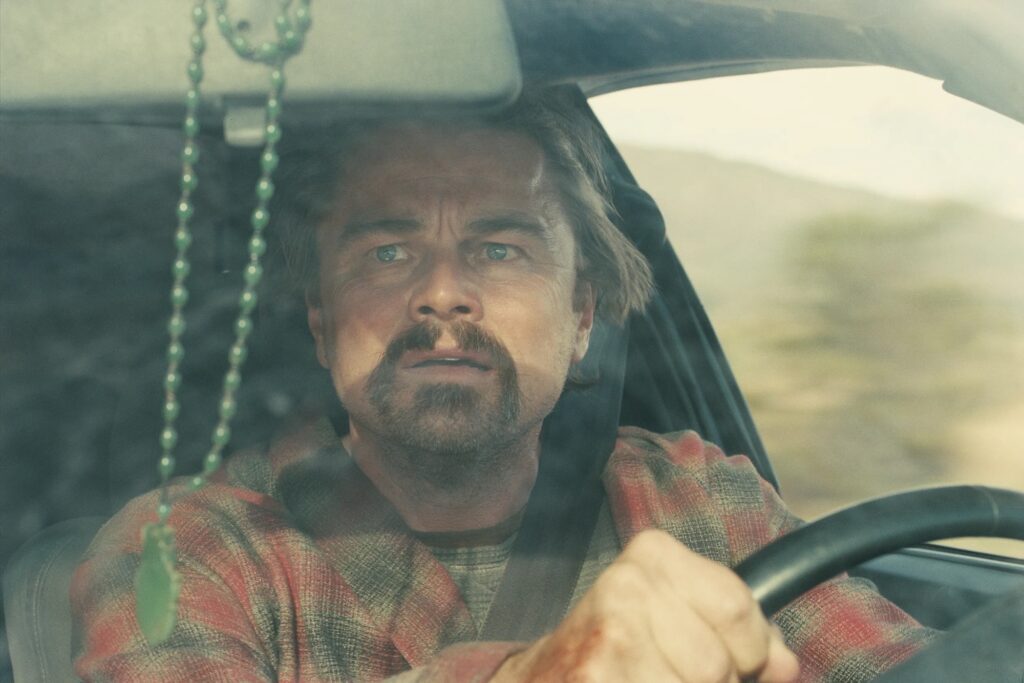
The artistic achievement of sound in One Battle After Another has now been recognized with an Oscar nomination for Scarabosio, Villaflor, and García at the 98th Academy Awards.
“I’m really proud of how it all turned out,” says Villaflor of the soundtrack. “It’s big and bold, and it’s not timid. It’s not pulling any punches at all. And it goes along with the story. A small, intimate story about a father and a daughter.”
Scarabosio is happy that the sound design for One Battle After Another remains true to Paul Thomas Anderson’s distinctive style, while simultaneously inviting his longtime collaborator into new creative territory.
“I think on maybe the second day of the mix,” Scarabosio laughs, “Paul said something to the effect of ‘I think we can all agree that this movie needs to be loud as hell.’”
—
Clayton Sandell is a Star Wars author and enthusiast, Celebration stage host, and a longtime fan of the creative people who keep Industrial Light & Magic and Skywalker Sound on the leading edge of visual effects and sound design. Follow him on Instagram (@claytonsandell) Bluesky (@claytonsandell.com) or X (@Clayton_Sandell).