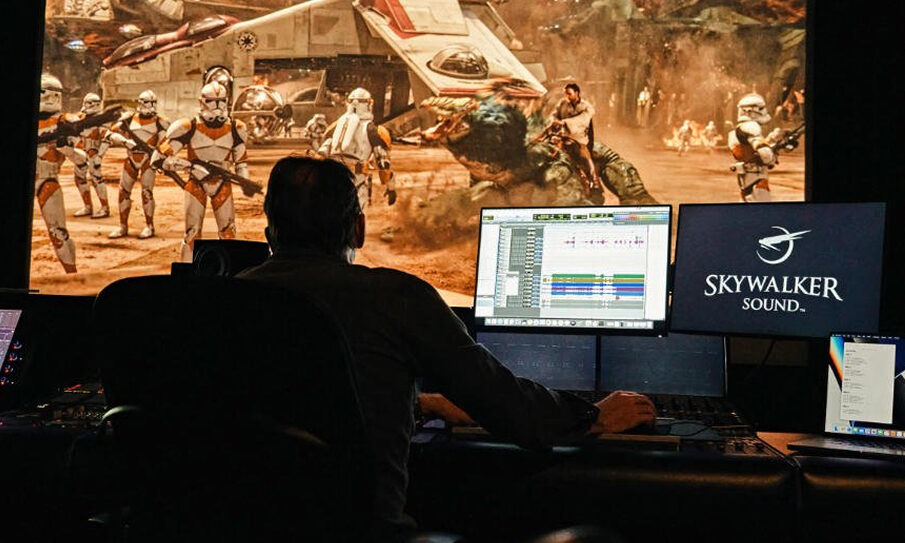
Skywalker Sound and Lucasfilm Honor Ben Burtt’s 50 Years of Storytelling and Innovation
The pioneering sound designer is the first at Lucasfilm to reach the half-century milestone.
50 years ago in 1975, Ben Burtt didn’t just start the company that we know today as Skywalker Sound — he was that company.
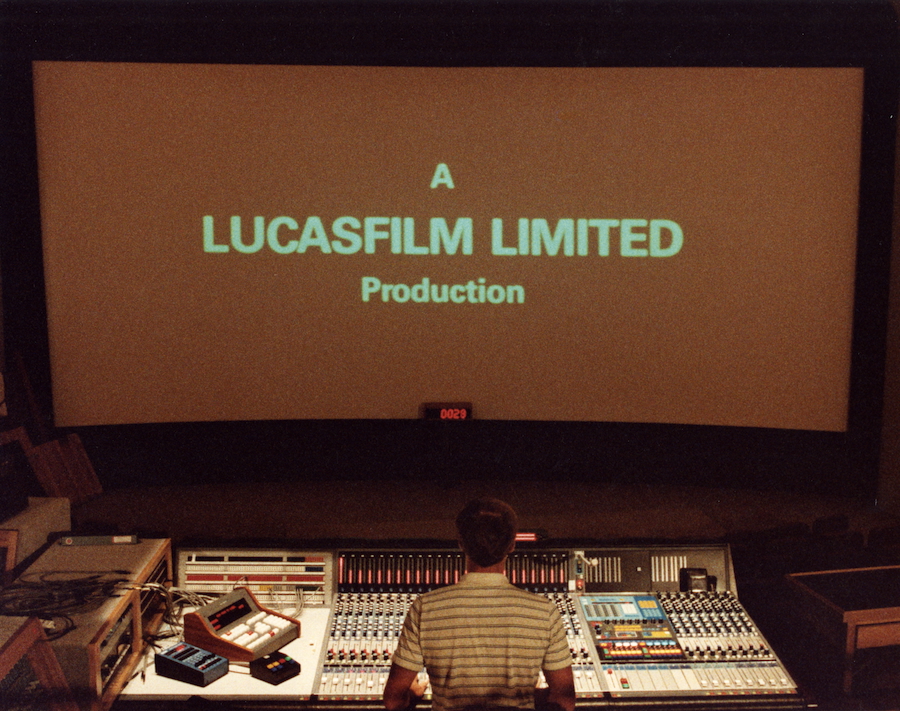
As a one-man sound design team on Star Wars: A New Hope (1977), Burtt gave the world’s most iconic movie franchise its voice. He’d been recruited out of the University of Southern California film school, which Lucasfilm had called, asking, “Who’s the next Walter Murch?” A close collaborator of George Lucas’, Murch worked as a sound artist on both THX 1138 (1971) and American Graffiti (1973) before moving on to a number of iconic productions with director Francis Ford Coppola. His absence at Lucasfilm left the need for a new artist.
“My father was a science teacher,” says Burtt, “a beloved professor at Syracuse University teaching chemistry for 50 years, which is about where I am now at Lucasfilm. So I probably modeled myself on him, watching him while I was growing up. Filmmaking just captured me, and that eventually took over.”
Burtt brought his unique sense of ingenuity to the Star Wars galaxy, crafting sounds of technologies, creatures, and vehicles from organic, real-world sources. He traveled the country, and eventually the world, to collect ingredients for his designs, which included everything from mundane household items to active military equipment and exotic animals. Along with lightsabers, laser blasts, and starships, Burtt designed vocals for some of the most iconic characters in cinema history, including R2-D2 and Chewbacca in A New Hope, as well the namesakes of both E.T. the Extra-Terrestrial (1982) and Wall-E (2008).
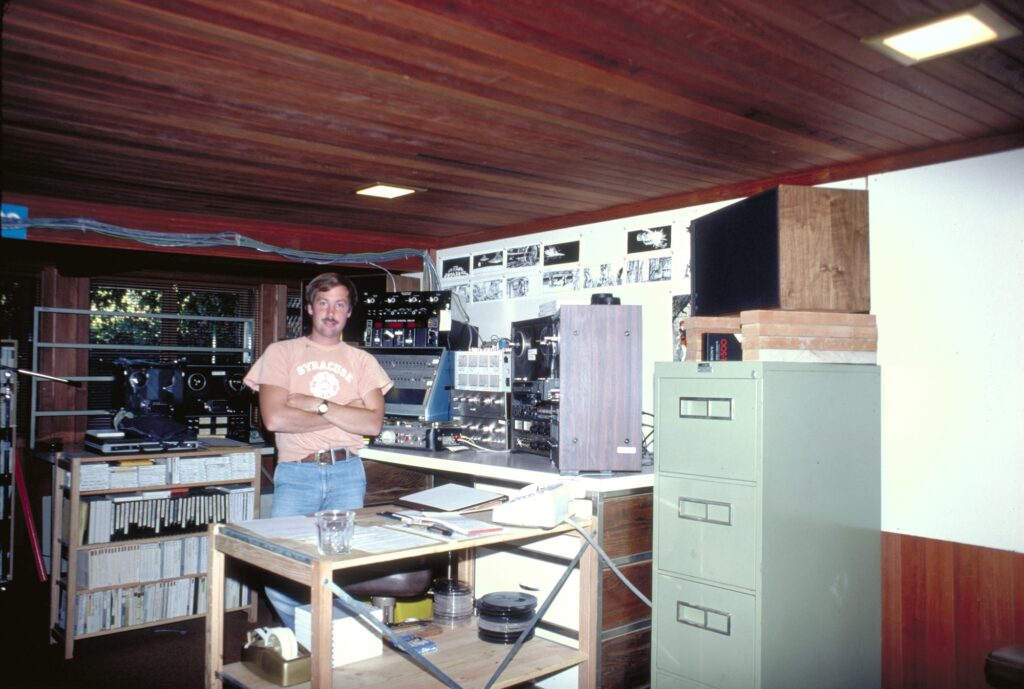
Following the pioneering work of Walter Murch, Burtt helped to create the modern role of sound designer, a term that was still new at the time.
“Normally in L.A., I would’ve just been a recording person, or just a sound editor, or just a re-recording mixer,” Burtt explains. “Generally, it was never the same person doing each role. The work was handed along from the production recording on a set to editors and then later to mixers to finish it. There wasn’t one mindset working through that whole system. George wanted that process of developing sound for a movie to start back at the time of production, if not before production, when you’re writing the script. You can talk about ideas and concepts, and have a person start working on the sound.
“Earlier on, it was Walter Murch, and then later it became me, and then it became just the way the San Francisco Bay Area wanted to do its films,” Burtt continues. “They modeled themselves on George Lucas’ way of doing it. You’d hire a smaller team, and they’d stay with the film throughout the process of recording, editing, designing sounds, and mixing it.”

In the wake of A New Hope — for which Burtt received a Special Achievement Academy Award — this philosophy of sound design formed the bedrock of Sprocket Systems, Lucasfilm’s post-production division that was the forerunner of Skywalker Sound.
“We hired people who were up for working in the way we wanted to,” Burtt recalls. “They understood that I was a sort of extension of George when he wasn’t around to come up with ideas and guide the team creatively. I wasn’t just hiring people, pushing paper, or signing paychecks — I wasn’t any good at that anyway. I was doing as much of the work in the trenches as they were. Sprocket Systems took pride in working that way.”
Lucasfilm’s Renaissance Man
While continuing to lead the creative efforts at Sprocket Systems and work on iconic productions like Star Wars: The Empire Strikes Back (1980) and Raiders of the Lost Ark (1981), Burtt also took on increasingly diversified roles at Lucasfilm. He recruited, mentored, and collaborated with the company’s earliest hires, from Gary Summers and Randy Thom to Tomlinson Holman and Gary Rydstrom. He helped lead the effort to conduct sound mixes in Northern California with the introduction of the C Theater at San Rafael’s Kerner facility, featuring Holman’s new THX Sound System.
Burtt was a veritable pioneer of Skywalker Ranch as well. He and colleagues Summers and Thom were the first creatives to work there, before any construction took place, using the valley that later became home to Skywalker Sound’s Technical Building as a location for recording gunshots and explosions, among other sound effects.
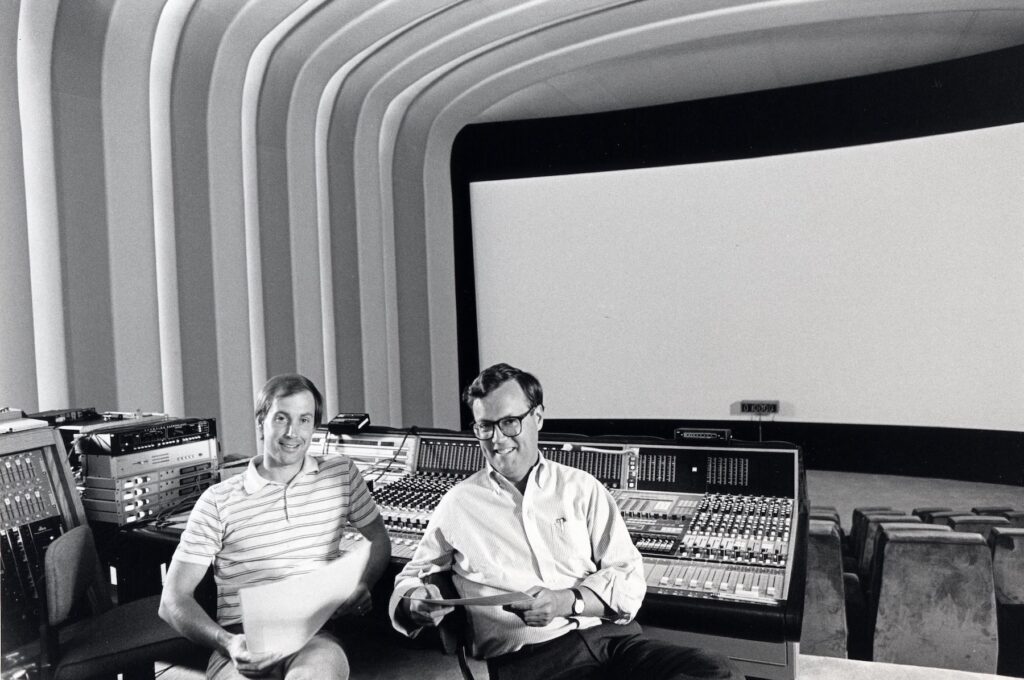
In 1984, Burtt sound designed The Adventures of Andre & Wally B., the first animated short created by the Lucasfilm Computer Division with a new imaging machine called the Pixar. This marked the beginning of Skywalker Sound’s 40-year collaboration with Pixar Animation Studios. Burtt also acted as the first test user of the EditDroid, one of the first nonlinear digital editing systems. And in the mid-1980s, he wrote the screenplay for The Great Heep, a story about an intergalactic explorer, Mungo Baobab, in the Star Wars: Droids (1985) animated television series.
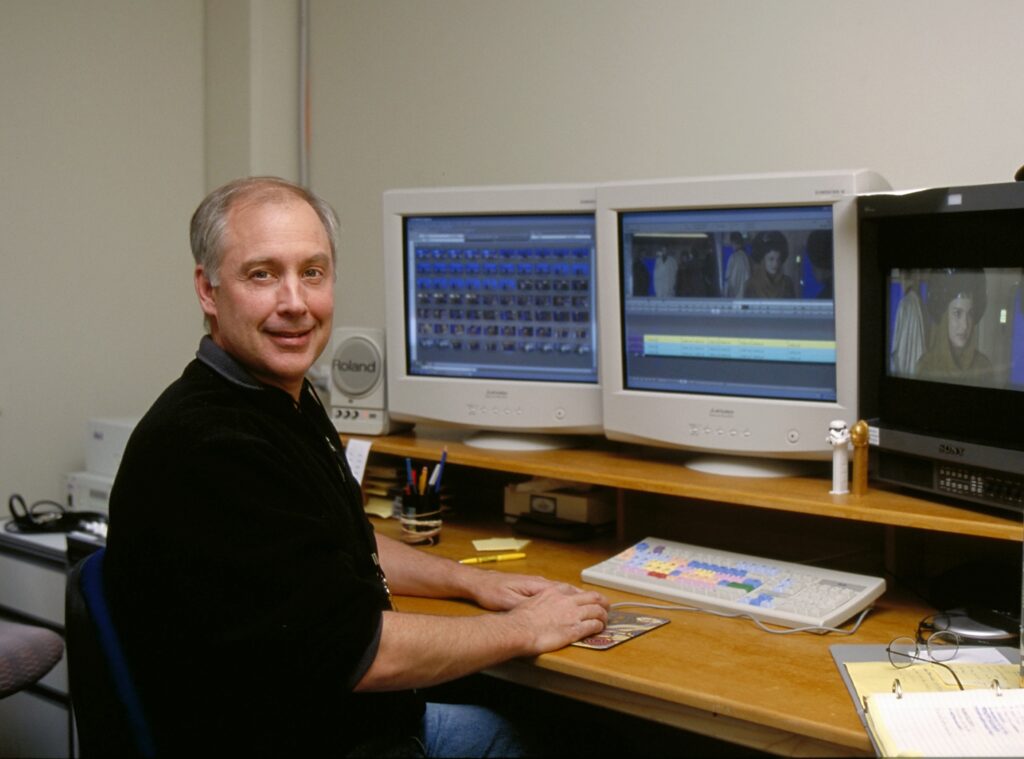
By the early 1990s, Burtt took a central role in Lucasfilm’s intrepid production, The Young Indiana Jones Chronicles (1992–96). He was second unit director, leading shoots on multiple continents, including in Africa, where the team picked up the nickname, “The Crocodile Unit.” Back at Skywalker Ranch, Burtt was one of the series’ editors, again working on the EditDroid system. He then both wrote and directed his own entry in the series, Attack of the Hawkmen, an adventure story of World War I fighter pilots that incorporated elaborate visual effects, and ultimately earned an Emmy nomination.
In 1996, Burtt co-wrote and directed Special Effects: Anything Can Happen, a short feature documentary presented by IMAX and later nominated for an Academy Award. It was one of several IMAX productions that he directed. Also throughout 1996, Burtt was among the project leads for the complete restoration and re-mastering of the original Star Wars trilogy for the new Special Edition releases. This feat of cinematic archaeology laid the foundations for the continued revitalization of the classic films, which will soon be celebrating their own 50th anniversaries.
After George Lucas, Burtt was among the first artists to work on the Star Wars prequel trilogy. He created videomatics of sequences like the fabled podrace from The Phantom Menace, sometimes recruiting his son, Benny, to stand in as Anakin Skywalker. On all three prequel entries, Burtt continued his role as the chief sound architect of the Star Wars galaxy, crafting everything from podracer engines to seismic charges to lava explosions. In the process, he was a mentor to artists who’ve continued to expand the Star Wars sound library, including Matthew Wood and David Acord. Burtt was also a picture editor on Episodes I, II, and III, working side-by-side with George Lucas to innovate new techniques in digital filmmaking. (And yes, he has a cameo appearance on screen in The Phantom Menace as well!)
An Ongoing Legacy
It’s difficult to overestimate the impact of Ben Burtt’s work. His creations as a sound designer are indelible parts of world culture. He’s arguably done more than anyone to popularize the role of sound artists in filmmaking, helping to broaden the scope and applicability of the craft. Because of the work began by people like Burtt and Walter Murch, filmmakers today view sound design as a critical function of their storytelling.
But of equal importance — especially as we now celebrate Burtt’s 50th anniversary with Lucasfilm — is the presence he’s been within the company, as a mentor, collaborator, and friend. Burtt exemplifies the company’s enduring spirit of passion, curiosity, and innovation.
His work continues into the next 50 years on any number of film productions and special projects.
“I’ve been a documentarian,” Burtt says. “As we’ve gone along, I’ve tried to keep track of what we were doing. We went through a very interesting revolution there after Star Wars where sound was put on a new level and new awareness. We had lots of great, creative challenges given to us. Now we’re waiting for the next direction to go. Some filmmakers still don’t plan ahead very much as far as what they can do with sound. There are exceptions, but often there isn’t a lot of initiative with producers to do it because it costs money and time. I spend a lot of time in my laboratory these days, pondering ‘why do we do what we do?’”
50 years on, with plenty more adventures to be had, it’s important to consider how life deals each of us special opportunities. It’s only a matter of saying yes to them. For Burtt, the last 50 years might very well have turned out quite differently.
“When Star Wars first came up as an employment opportunity, I had just finished my masters degree at USC,” Burtt concludes. “My wife and I were almost certain that our life plan was to move back east, where we’re both from, to be near our families, and I would teach science at a high school, because I had a degree in physics. This whole movie-making thing was a hobby that had grabbed me and taken me on this adventure. We anticipated that we’d get ‘sensible’ at some point and move back to have a ‘normal’ life. We kept postponing that until probably the mid-1980s, when we realized that we weren’t going to go back east, and I wasn’t going to be a science teacher. This is going to keep unfolding.”
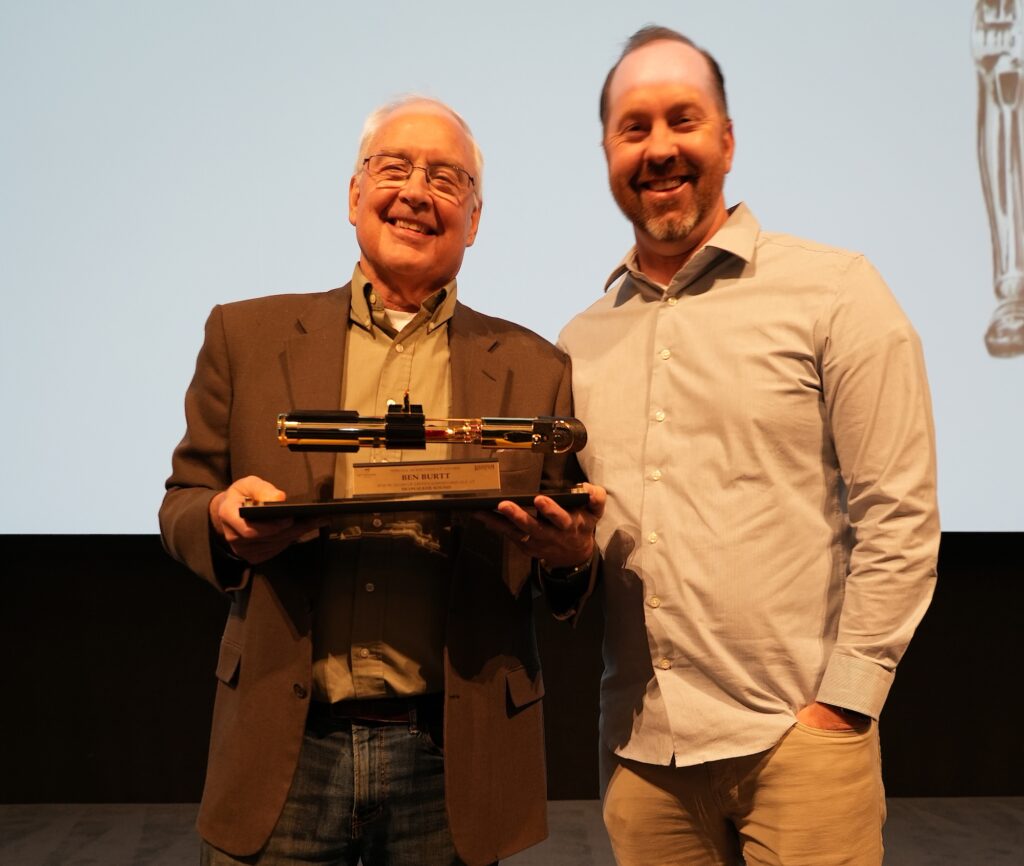
Read more about Lucasfilm’s 2025 Service Award recipients on Lucasfilm.com.
–
Lucas O. Seastrom is the editor of Skysound.com and ILM.com, as well as a contributing writer and historian at Lucasfilm.